10 Types of Naan Bread: A Complete Guide to Every Variety
 March 16, 2026
|Share


Naan is one of the most recognized flatbreads in the world. Soft, slightly charred, and pulled fresh from a clay tandoor oven, it has been a staple of South Asian cuisine for centuries. From Northern Pakistan and Afghanistan to India and Bangladesh, naan travels with the culture it comes from and picks up new variations along the way.
Whether you are planning an Iftar spread in Ramadan, a weekend dinner with family, or simply want to understand the difference between Garlic Naan and Roghni Naan, this guide covers every variety worth knowing.
10 Types of Naan Bread Explained
Every variety of naan starts with the same basic dough, but what goes into it, how it is shaped, and what is added before or after baking sets each type apart. Here is a complete look at the most well-known varieties.
Plain Naan
Plain Naan is where every naan menu starts. Made from wheat flour, yeast, salt, and yogurt, it is baked directly on the walls of a clay tandoor oven until soft, fluffy, and lightly blistered. It pairs with virtually everything on a South Asian table, from rich curries to simple dal, and holds up equally well as a breakfast bread with butter and chai.

Best Paired With
- Daal Tarka – Soft plain naan soaks up lentil curry perfectly without overpowering its earthy, simple flavor.
- Lahori Cholay – The neutral base of plain naan lets the bold, spiced chickpea curry take center stage.
- Makhani Chicken Handi – Fluffy naan cuts through the richness of butter and cream beautifully.
Garlic Naan
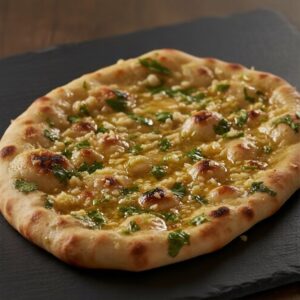
Garlic Naan is the most popular naan variety among Western diners and for good reason. Minced garlic and butter are pressed into the dough before baking, giving every bite a garlicky, buttery flavor that works particularly well when torn and dipped into creamy curries. It is simple, widely loved, and rarely left on the plate.
Best Paired With
- Chicken Tikka Masala – Garlic and creamy tomato masala are a classic match. Made for each other.
- Malai Kofta – Buttery garlic naan complements the nutty, cream-based kofta sauce without clash.
- Palak Paneer – The garlic in the naan echoes the aromatics in spinach gravy, deepening every bite.
Keema Naan
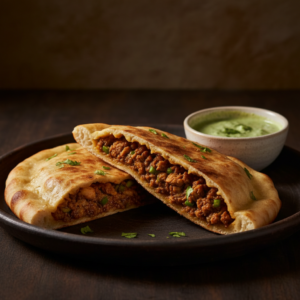
Keema Naan (keema means minced meat) takes naan beyond a side dish and into a meal of its own. Spiced minced meat, usually chicken, lamb, or beef mixed with herbs and green chilies, is stuffed inside the dough before it goes into the tandoor. The result is a rich, filling bread that works just as well on its own as it does alongside a curry.
Best Paired With
- Raita – Cool, herb-infused yogurt is all Keema Naan needs. It balances the spiced filling perfectly.
- Fresh Salad + Imlee Chutney – Keeps the meal light while the tamarind chutney adds a sharp contrast.
Roghni Naan
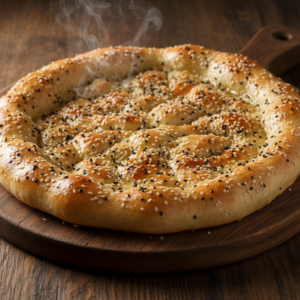
Roghni Naan originates from Afghanistan, where it is known as Naan-E-Roghani. The word roghni refers to the oil or fat worked into the dough, which gives this naan a noticeably softer and more pillowy texture than standard naan. Topped with sesame seeds and nigella seeds before baking, it has a slightly nutty finish and a richness that makes it a favorite for special occasions and gatherings.
Best Paired With
- Mozang Chicken Karahi – Pillowy roghni holds up to karahi’s bold, high-flame masala without tearing.
- Lalla Ki Nihari – The soft, rich dough absorbs bone marrow stew beautifully. A traditional pairing done right.
- Mutton Korma – Roghni’s nutty sesame finish complements slow-cooked korma’s deep, whole-spice flavor.
Peshawari Naan
Peshawari Naan takes its name from Peshawar, the city in northwestern Pakistan where it originates. It is filled with a sweet mixture of almonds, raisins, and desiccated coconut, giving it a taste closer to a sweet pastry than a savory bread. In Pakistan, it is traditionally eaten at breakfast, though in the UK it has become one of the most popular restaurant naan varieties served alongside savory dishes.

Kulcha Naan
Kulcha is made with maida, a refined white flour, rather than whole wheat, which gives it a distinctly flaky and layered texture instead of the soft fluffiness of standard naan. It is a popular street food bread across Punjab and pairs particularly well with chana masala. Kulcha can also be stuffed with potato or lentil fillings to make it a meal on its own.

Butter Naan
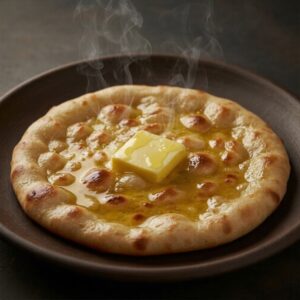
Butter Naan is essentially plain naan finished generously with butter or ghee (clarified butter) the moment it comes out of the tandoor. The heat of the bread melts the butter instantly, leaving the surface buttery and soft with a flavor that pairs well with milder curries like butter chicken, dal makhani, and malai kofta.
Khamiri Roti
Khamiri Roti is one of the oldest breads in South Asian culinary history, with roots going back to the Mughal era. The word khamiri comes from khameer, meaning yeast or fermentation, and this roti is made using a naturally fermented dough that gives it a slightly tangy flavor and a softer, airier texture than standard roti. It was a staple of Mughal royal kitchens and remains a distinctive bread that most people outside of Pakistan and India have never encountered.

Best Paired With
- Lalla Ki Nihari – Khamiri Roti and Nihari is a Mughal-era combination that remains unmatched to this day.
- Phajjay Ke Paye – The tangy fermented bread cuts through the richness of slow-cooked trotters and bone marrow.
Tandoori Roti
Tandoori Roti is a whole wheat flatbread baked directly inside a clay tandoor oven. It is lighter and less rich than naan, with a slightly smoky flavor from the tandoor and a chewy texture that makes it ideal for scooping up thick gravies and dry preparations. For those who prefer a less indulgent bread without sacrificing the tandoor flavor, Tandoori Roti is the natural choice.

Best Paired With
- Charsi Chicken Karahi – The roti’s chew handles black pepper karahi’s bold, dry-style masala with ease.
- Bhindi Masala – Light roti pairs well with this simple okra curry without making the meal heavy.
- Namak Mandi Karahi – Minimalist Peshawari-style karahi deserves an equally unfussy bread alongside it.
Plain Paratha
Paratha is not a naan, but it belongs in any conversation about South Asian breads. The name comes from the words parat and atta, meaning layers of cooked dough, and that layering is exactly what makes it different. Butter is folded into the dough repeatedly before it is cooked on a tawa (flat pan), creating a flaky, crispy exterior with a soft interior. It is a breakfast staple across Pakistan and India, and one of the most satisfying breads in the cuisine.
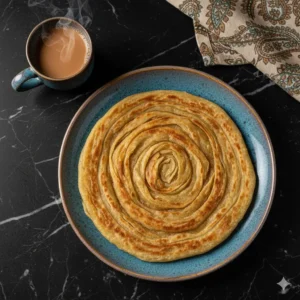
Discover the differences between Roti, Naan, and Paratha. Pair them with our signature items at Laree Adda for a memorable dining experience.
Naan at Laree Adda in Jersey City
Laree Adda in Jersey City bakes every bread fresh in a clay tandoor oven. The bread menu covers the full range of South Asian flatbreads.
Here is what is available:
- Plain Naan: Fluffy, round bread baked in the clay oven
- Garlic Naan: Minced garlic and butter baked in the clay oven
- Keema Naan (Chicken): Minced chicken, herbs, and spices are filled in dough and baked in the clay oven
- Roghni Naan: Garnished with sesame seeds and butter, baked in the clay oven
- Tandoori Roti: White flour round bread baked in the clay oven
- Khamiri Roti: Traditional Mughal era fermented flatbread
- Plain Paratha: Layered flatbread with butter filling cooked on a tawa
For the full range of Naan breads, check out the Laree Adda menu. It covers everything, from curries and karahi to grills and desserts, all of which pair best with our delicious Naans.
Where Naan Comes From
The first known record of naan appears in the writings of the Indo-Persian poet Amir Khusrau around 1300 AD. At that time, naan was considered a delicacy reserved for nobility and royal families during the Mughal era in India. The craft of baking in a tandoor at temperatures close to 900°F was a specialized skill, and access to it reflected status.
Yeast, brought to India from Egypt, is what gave naan its characteristic rise and soft texture. Over centuries, as trade routes expanded and communities migrated, naan spread across Central Asia, the Middle East, and eventually the Western world. Today it is found in every corner of the globe.
Naan at the Dinner Table and Beyond: Final Thoughts
Naan is not reserved for restaurants or special occasions. Across Pakistani and Indian households in New Jersey, fresh naan is a daily staple that makes any weeknight meal feel like a proper sitting. Whether it is a weeknight curry or a weekend gathering with family, the right bread on the table makes everything better.
For those who want the full tandoor-baked bread and curry experience without cooking, you can make a reservation at Laree Adda in Jersey City and let the kitchen handle everything.
For larger gatherings and events across New Jersey, authentic tandoor-baked breads and curries can be brought to your table through the halal catering services in NJ that Laree Adda provides statewide.