Eid al-Fitr and Food Significance: A Celebration on Every Table
 March 11, 2026
|Share


Eid al-Fitr is one of the most joyful occasions in the Muslim calendar. It marks the end of Ramadan, a full month of fasting from dawn to dusk, and signals a time of gratitude, togetherness, and celebration. At the heart of every Eid gathering, without exception, is food. From the first bite of Sheer Khurma in the morning to a full spread of Biryani, Karahi, and sweets by afternoon, the Eid table tells a story of culture, family, and tradition. At Laree Adda in Jersey City, these are the dishes we cook with pride every day, and on Eid, they mean everything.
Why Food Matters So Much on Eid al-Fitr
After a month of fasting, the first meal of Eid carries a significance that goes beyond hunger. It is an act of gratitude. Early Muslim communities marked the end of Ramadan with sweets made from dates and honey, ingredients that were readily available and deeply symbolic. That tradition of celebrating with food has carried forward across centuries and continents.
Over generations, South Asian, Middle Eastern, and African communities each brought their own ingredients, techniques, and flavors to the Eid table. What you eat on Eid today depends greatly on where your family comes from, but the spirit behind every dish remains the same.
Eid Breakfast: How the Day Begins
Eid morning has its own rhythm. Families wake early, dress well, and head to prayers before returning home to a breakfast that feels special. In South Asian households, this morning spread is as much a part of Eid as the prayers themselves. It is warm, filling, and deeply familiar.
Halwa Puri
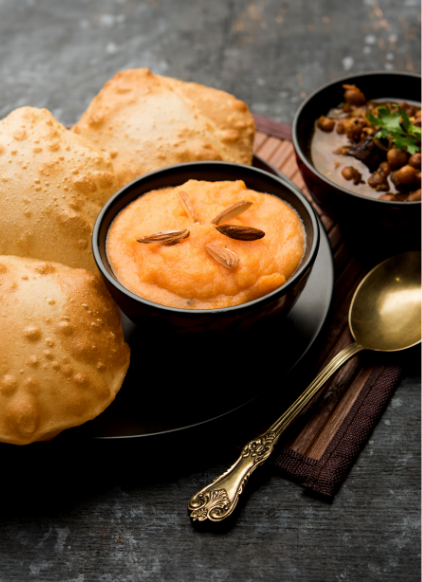
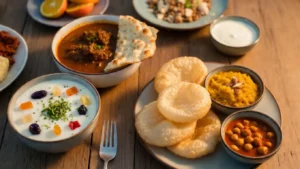
In Pakistani and North Indian households, Halwa Puri is what Eid morning looks like on most breakfast tables. Crispy, puffed puris served alongside semolina halwa, spiced chickpea curry, and achar make up a plate that is hard to say no to on a festive morning. It is the kind of breakfast that brings the whole family to the table before the day even gets started.
Sheer Khurma
For millions of Pakistani and Indian Muslim families, Sheer Khurma is the first thing made and the first thing eaten on Eid morning. It is a rich, creamy pudding made with fine vermicelli noodles, full-fat milk, dates, and a generous handful of nuts and dried fruits. Scented with cardamom and rose water, it is prepared the night before and served warm to every guest who walks through the door.
No other dish captures the feeling of Eid quite like a bowl of Sheer Khurma. It is comfort, celebration, and tradition in a single serving.
Nihari with Naan
In many Pakistani households, particularly those with roots in Lahore and Karachi, Nihari is an Eid morning staple. This slow-cooked beef or lamb stew simmers overnight on a low flame, developing a deep, spiced gravy that is best eaten with fresh naan or kulcha. It is hearty, warming, and the kind of dish that makes Eid morning feel like a proper occasion.
The Savory Eid Table: Main Course Dishes
Once prayers are done and family begins to arrive, the main feast takes over. Eid lunch and dinner across South Asian households are built around rich, slow-cooked meat dishes prepared with care and patience. These are not everyday meals. They are reserved for occasions that deserve the effort.
Biryani
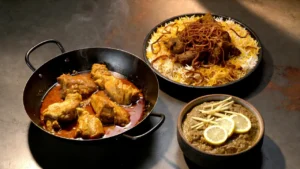
Biryani is the dish most families build the Eid table around. Layers of marinated meat and fragrant basmati rice, slow-cooked together with whole spices, saffron, and caramelized onions. It is a dish that announces a celebration the moment its aroma reaches the room. Every family has their own recipe, and nobody agrees that anyone else’s is better.
Karahi
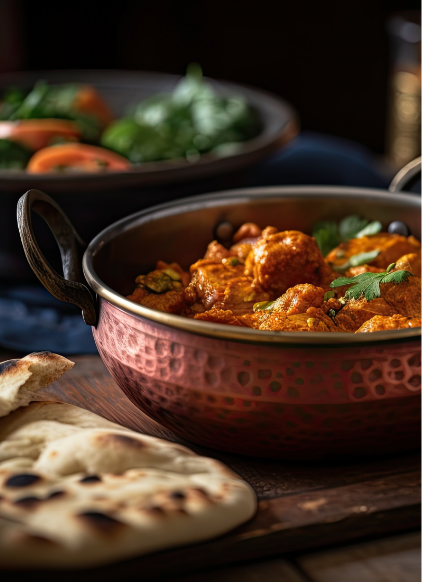
Karahi is a staple of any large Eid gathering. Chicken or lamb cooked in a wok-style pot with tomatoes, ginger, garlic, and green chilies. It is bold, quick to prepare in large quantities, and loved across generations. When a household is feeding twenty guests on Eid, Karahi is almost always on the stove.
Haleem
Haleem is a slow-cooked blend of meat, lentils, and broken wheat that has become a popular Eid dish across Pakistan and parts of India. It takes hours to prepare properly, which is part of what makes it feel special. Topped with fried onions, fresh ginger, green chilies, and a squeeze of lemon, it is filling and full of flavor.
Eid Sweets and Desserts
Sweets are not an afterthought on Eid. They are central to the celebration, shared with neighbors, gifted to relatives, and placed on every table before guests even sit down. The variety across South Asian and Muslim cultures is remarkable.
Mithai and Buttery Cookies
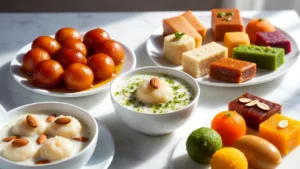
Across the Muslim world, Eid is synonymous with mithai and cookies. The common thread is a rich, buttery dough that melts on the tongue. In Syria and Lebanon they are called maamoul, filled with date or walnut paste. Iraqi Muslims enjoy klaicha, while Egyptians savor honey-filled kahk. In Pakistan and India, mithai shops see their busiest days of the year in the week leading up to Eid.
Ras Malai
Ras Malai is a dessert that earns its place on the Eid table every year. Soft cheese curd balls soaked in a sweetened, cardamom-scented milk syrup, topped with crushed pistachios and almonds. It is light, creamy, and satisfying in a way that feels right after a heavy meal. In Pakistani sweet shops, it is one of the first things to sell out before Eid.
Kheer
Kheer is rice pudding done properly. Slow-simmered milk, rice, and sugar cooked together until thick and creamy, finished with cardamom and topped with pistachios and almonds. It is one of the most widely made Eid desserts across South Asia, loved by children and elders equally.
Gulab Jamun
Few desserts get people as excited as gulab jamun. Soft milk-solid balls, deep-fried until golden and soaked in a fragrant sugar syrup. They are served warm or cold, and either way they are gone from the plate fast. Across Pakistan, India, and Bangladesh, gulab jamun is an Eid staple that shows up on every dessert table without fail.
Traditional Eid Drinks That Complete the Table
No Eid spread is complete without something to drink alongside it. In South Asian households, the meal is almost always accompanied by drinks that are as celebratory as the food itself. Two drinks in particular show up on Eid tables across Pakistani and Indian communities in New Jersey and beyond.
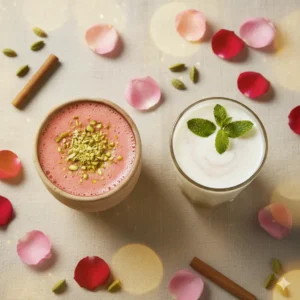
Kashmiri Chai
Kashmiri Chai, also known as noon chai or pink tea, is one of the most distinctive drinks in South Asian culture. Brewed from a special green tea with baking soda and milk, it turns a beautiful dusty pink and is finished with crushed pistachios and almonds on top. It is creamy, lightly salted, and unlike any other tea you have tried. On Eid, a warm cup between courses is something many families look forward to as much as the food itself.
Lassi
Lassi is the drink that brings balance to a rich Eid meal. This yogurt-based drink comes in sweet and salted varieties, and both have their loyal followers at the Eid table. Sweet lassi is thick, cool, and often flavored with rose water or mango. Salted lassi cuts through the richness of heavy curries and biryanis, making it the practical choice after a full plate. Either way, a cold glass on Eid feels well earned.
Eid Food Across Different Cultures
One of the most interesting things about Eid al-Fitr is how differently it is celebrated through food around the world. In Morocco, families celebrate Eid with Sellou, a dense mixture of toasted flour, almonds, and honey. In Turkey, Baklava is the Eid sweet of choice. In Somalia, Cambuulo, a dish of adzuki beans and butter, is a celebration staple.
In South Asia, the Eid table draws from a cooking tradition that goes back centuries. Pakistani and Indian households blend Mughal-era recipes with regional flavors that vary from Punjab to Hyderabad. The food is rich, well-spiced, and built for sharing with a crowd.
If you want to explore all the Pakistani and Indian dishes that belong on an Eid table, the Laree Adda menu is a great place to browse everything available for your celebration.
Celebrate Eid at Laree Adda in Jersey City
Not every family wants to spend Eid in the kitchen. Many households choose to gather at a restaurant where the food is authentic, the portions are generous, and the only thing on the agenda is enjoying the day together.
Laree Adda in Jersey City serves the kind of Pakistani and Indian food that makes Eid feel like Eid. From Biryani and Karahi to Ras Malai and Kheer, the menu is built around the dishes that matter most on this occasion. If you are planning to bring the family together for an Eid meal, you can make a reservation at Laree Adda to secure your table well ahead of the celebration.
For those hosting an Eid gathering at home or at a venue, the authentic desi food you need for your guests is available through the Eid Catering services in NJ that Laree Adda provides across New Jersey.