Saag Paneer vs Palak Paneer: Key Differences Explained
 March 17, 2026
|Share


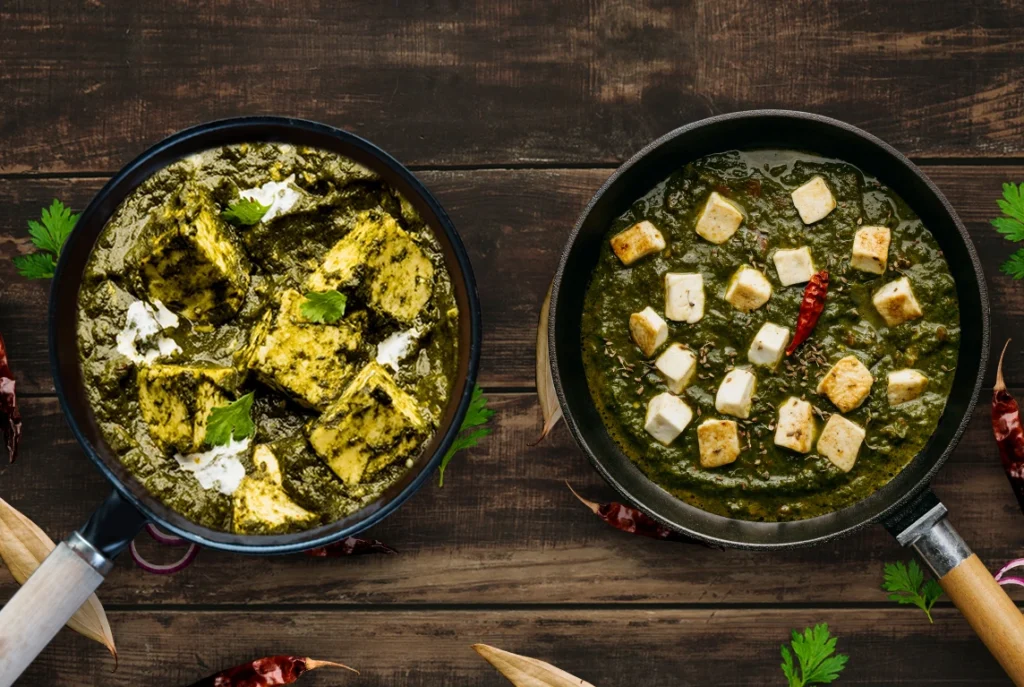
Saag Paneer and Palak Paneer get mixed up more than almost any other Indian dishes, and the difference between them is simpler than most people think. Both are green curries. Both contain paneer. But order them side by side and you will immediately notice they are not the same dish. Different color, different texture, different depth of flavor. The greens tell the whole story.
Saag Paneer vs Palak Paneer
Here is how the two dishes compare:
Feature |
Palak Paneer |
Saag Paneer |
|---|---|---|
| Primary Green | Spinach only | Mixed leafy greens |
| Color | Bright vibrant green | Darker, deeper green |
| Flavor | Mild and clean | Earthy and complex |
| Texture | Smooth and creamy | Coarser and rustic |
| Cream Used | Almost always | Traditional versions skip it |
| Origin | North India | Punjab, North India |
| Best Paired With | Naan, jeera rice | Makki di roti, naan |
The Greens
This is where everything starts. Palak paneer uses only spinach. Saag paneer uses a mix of whatever leafy greens are available: mustard, fenugreek, radish greens, bathua, spinach, or some combination of all of them. That mix is why no two versions of Saag paneer taste exactly alike.
Color
Palak paneer has that recognizable bright, almost electric green. Blanched spinach holds its color beautifully. Saag paneer is darker, closer to an olive or forest green because the mustard and fenugreek leaves pull the color down during cooking and that is completely normal.
Flavor
Palak paneer is gentle. The spinach is mild, the spices are warm, and the cream smooths everything out. It is the kind of curry that does not challenge anyone at the table. Saag paneer is a different proposition entirely. It is earthy, slightly bitter from the mustard greens, with a layered complexity that builds as you eat. It rewards people who actually want to taste the greens, not just the sauce.
Texture
Spinach blends into a near-velvet puree. That is why Palak paneer feels so smooth. Saag paneer, made with coarser greens like mustard and fenugreek, has a more rustic consistency. It does not pretend to be silky and it is better for it.
Cream and Dairy
Palak paneer almost always finishes with cream or yogurt. It is part of what makes the dish so approachable. Traditional Saag paneer does not need it. The complexity of the mixed greens carries the dish. Most restaurants add cream to both dishes now, but if you ever have a home-cooked Saag paneer in a Punjabi household, chances are there is no cream in sight.
Which One to Order
First time ordering Indian food, start with Palak paneer. You will not be overwhelmed and you will understand why it is one of the most ordered vegetarian dishes on any Indian menu. If you already know your way around a curry and want something with more character, Saag paneer is worth ordering every time.
What is the Difference Between Palak and Saag?
Palak is simply the Hindi and Urdu word for spinach. Nothing more. Any dish with Palak in the name is a spinach dish. Saag means leafy greens broadly. Not one vegetable. Any greens. Mustard, fenugreek, radish tops, spinach, bathua: Saag is the category, not the ingredient. The easiest way to remember it: spinach is always Saag, but Saag is not always spinach.
What Goes Into Each Dish?
Both dishes share the same aromatic base: onion, garlic, ginger, cumin, coriander, turmeric, and garam masala. The difference is in the greens and what happens with the dairy at the end.
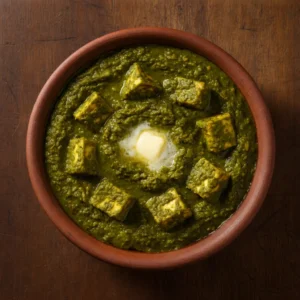
Palak Paneer
- Fresh spinach, blanched and pureed smooth
- Paneer cubes
- Cream or yogurt
- Onion, garlic, ginger, tomato
- Cumin, coriander, garam masala, kasuri methi (dried fenugreek leaves)
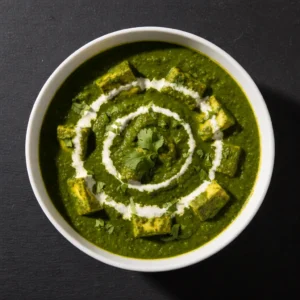
Saag Paneer
- Mixed greens: mustard, fenugreek, spinach, radish greens
- Paneer cubes
- Ghee or butter
- Onion, garlic, ginger
- Cumin, turmeric, fenugreek powder
- Cream optional, traditional versions do not use it
How These Dishes Vary by Region?
In Punjab, Saag paneer is cold weather food. Winter markets are full of fresh mustard greens and the Punjabi version of this dish, heavy on sarson (mustard), mixed with spinach, served with makki di roti and a spoonful of white butter, is one of the great comfort dishes of North Indian cooking.
Palak paneer is more uniform across India. In North Indian restaurants it is richer and creamier. In South India, some cooks add curry leaves and mustard seeds to the tempering oil, which shifts the flavor profile just enough to feel like a different dish entirely.
In the US and UK, both dishes have adapted to what is available. Kale, collard greens, and rapini have found their way into Saag paneer. Vegan versions swap paneer for tofu and cream for coconut milk. The spirit of the dish travels even when the ingredients do not.
Which Dish is More Common in the US?
Walk into any Indian or Pakistani restaurant in New Jersey and Palak paneer will almost certainly be on the menu. It is the safer, more familiar choice for a broad audience and it delivers a consistent experience regardless of where you order it.
Saag paneer is less predictable. The flavor depends entirely on which greens the kitchen uses that day. That unpredictability is exactly what makes it interesting. It also explains why most restaurants default to Palak paneer when they want to play it safe. If you see Saag paneer on a menu and the restaurant seems serious about its food, order it. You will likely not regret it.
Where to Find Palak Paneer in Jersey City?
Laree Adda in Jersey City makes Palak Paneer fresh daily using authentic North Indian recipes with real spinach and paneer, not frozen bases or shortcuts. It is on the vegetarian menu year round.
For anyone searching for Palak paneer near me in Jersey City or across New Jersey, everything on the menu including Palak Paneer and its accompaniments is available on the Laree Adda menu before you visit or place an order.
For those hosting a gathering or event and looking to bring authentic Indian and Pakistani food to the table without cooking for a crowd, the halal catering services in New Jersey that Laree Adda provides cover events of all sizes across New Jersey.
To sit down and try Palak Paneer fresh from the kitchen, you can make a reservation at Laree Adda in Jersey City and have the full experience without the wait.