Samosa vs. Pakora: Which is the Ultimate Ramadan Snack?
 March 12, 2026
|Share


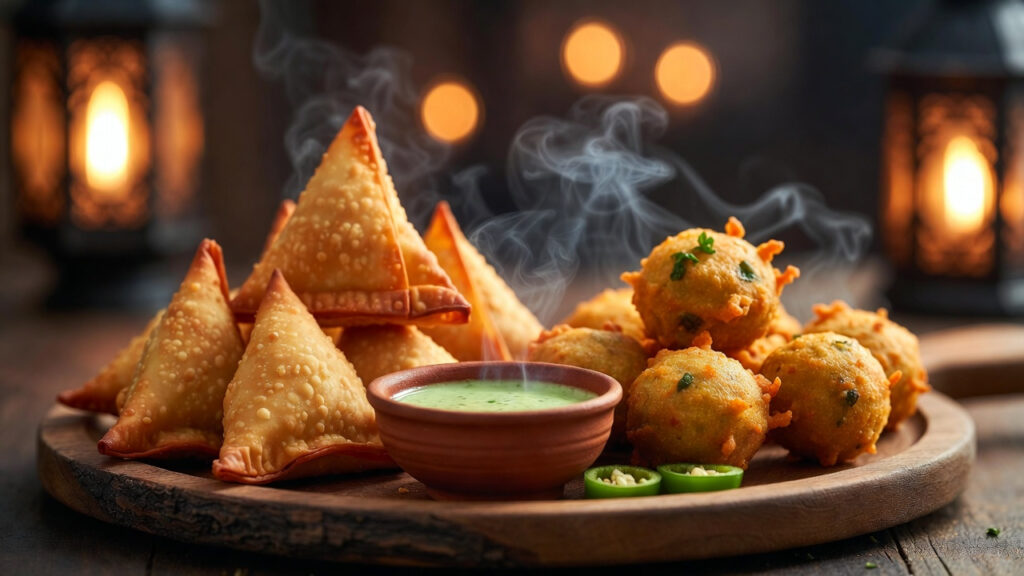
When Ramadan evenings arrive in New Jersey, two snacks dominate every Iftar table: samosas and Pakoras. Both are deep-fried, both are irresistible, and both carry centuries of South Asian tradition. But they are not the same snack, and the debate over which one deserves the top spot is very much alive.
The difference goes beyond shape. Samosas have a defined structure, a deliberate filling, and a crust built to hold. Pakoras are looser, more instinctive, and built around whatever is in the kitchen. The comparison table below breaks it down, but the real story is in the history, the variations, and which one actually belongs at your Iftar table.
Samosa vs. Pakora: A Quick Comparison
Two iconic snacks, one Iftar table, and a debate that never gets old. Here is how they stack up before we get into the details.
Feature |
Samosa |
Pakora |
|---|---|---|
| Shape | Triangular, defined | Irregular, free-form |
| Outer Casing | Wheat flour dough | Besan (chickpea flour) batter |
| Filling | Potato, keema, cheese | Onion, vegetable, chicken, paneer |
| Texture | Crispy, flaky shell | Crunchy, airy batter |
| Taste Profile | Savory | Savory or mildly sweet |
| Ramadan Relevance | High (Qeema Samosa) | High (quick, easy to batch fry) |
| Origin | Central Asia via India | Pan-Indian, ancient subcontinent |
What’s a Samosa?
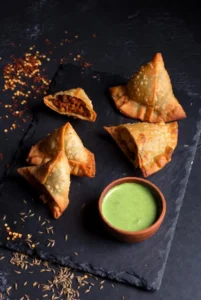
As the national snack of India, samosas carry regional variation wherever they travel. Non-vegetarian communities like the Bohris and Parsees specialize in patti samosas: triangular cocktail-size morsels with a thin, delicate crust and spiced Qeema filling. The common Punjabi Samosa, on the other hand, has a thicker crust and a hearty potato filling that holds up to dipping.
What’s a Pakora?
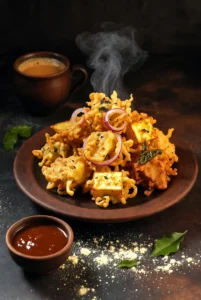
Pakoras are built on simplicity. One or two core ingredients, such as onion, eggplant, potato, plantain, paneer, chili pepper, fish, chicken, or bread, get coated in a seasoned gram flour batter and dropped straight into hot oil. The result is a crunchy, golden fritter with a soft, steaming interior that pairs with chai on a cold evening.
The Origin of Samosas
It would be fascinating to know who stuffed the very first samosa, but that record does not exist. What we do know is the etymology. This triangle-shaped snack was referred to as sanbosag in early Persian literature, a word scholars associate with its distinctive triangular shape, though no single definitive translation has been universally agreed upon.
Historical texts place this snack at the grand courts of the Ghaznavid Empire, where it was prepared over open fires during travel and loaded with meats, dried fruits, and nuts. Samosas reached the Indian subcontinent through Central Asian traders in the 13th or 14th century.
What happened next is what makes the samosa remarkable. Every wave of migrants entering India reshaped it. Spices like pepper, ginger, and coriander replaced heavy meats. Vegetables took over as primary fillings. Regional identities stamped themselves onto a snack that had already crossed empires. That adaptability is why the samosa is still one of the most consumed snacks on the planet today.
The Origin of Pakoras
Pakoras have deep roots across the Indian subcontinent, with references to besan-based fried snacks appearing in texts as far back as the 11th century. No single region owns the origin exclusively. Over centuries, distinct regional identities shaped the Pakora differently: in Punjabi households, a rain shower is still considered enough reason to fry a fresh batch with tea, while in South India, the same concept appears as bondas or bajji, which closely resemble Mauritius bhajas.
Pakoras are not limited to snack duty either. In the form of kadhi (Curry), Pakoras are simmered in a rich sauce of chickpea flour and sour yogurt, becoming a full main course that anchors weekday meals across North India.
Types of Samosa
Every samosa on this list has its own personality, but all of them belong on a Ramadan plate.
Samosa Aloo
The most accessible samosa in the world. A flaky, crunchy wheat crust wrapped around a spiced potato filling, best eaten hot straight from the fryer with a cup of tea. In the chill of a New Jersey winter evening, this is the one that disappears fastest off the plate.
Qeema Samosa
This is the Ramadan samosa. The filling is minced mutton blended with aromatic spices and yogurt, sealed with flour paste and left to dry completely before frying. Served with pudina chutney, the contrast between the crisp shell and the spiced meat inside is what makes it a non-negotiable at Iftar.
If you are hosting an Iftar gathering in New Jersey this Ramadan, Laree Adda catering services cover everything from samosa platters to full Iftar spreads. Fill out the form to get started.
Chipotle Cheese Samosa
A modern variation that earns its place at the table. Cheese, cooked potatoes, and green chillies combine into a filling that is rich, spicy, and slightly smoky. Baked at 200 degrees Celsius for 15 minutes or fried for a crispier finish, this samosa works as well at a casual family dinner as it does at a party spread.
Types of Pakoras
From spicy to mild, every pakora on this list earns its spot on the Iftar table.
Onion Pakora (Pyaaz Pakora)
The most recognized Indian snack on this list. Thinly sliced onions coated in seasoned besan batter (chickpea flour) and fried until golden, with edges that crisp up beautifully while the inside stays soft and sweet. One plate is never enough.
Mirchi Pakora
Built for spice lovers. A whole green chili dipped in thick besan batter and fried until the outside is crunchy and the pepper inside has softened to a tangy, fiery bite. A staple for anyone who wants heat with their Iftar spread.
Aloo Pakora
Sliced potatoes coated in spiced chickpea batter, fried to a satisfying crunch. A reliable comfort snack that shows up in nearly every restaurant mix-vegetable Pakora platter across New Jersey and beyond.
So Which One Wins at Ramadan?
Both belong on the Iftar table, but they serve different roles. Samosas, particularly the Qeema variety, carry weight and substance. They are the snack you break your fast with when you need something filling and satisfying after a long day. Pakoras are the snack you keep reaching for throughout the evening: light, crunchy, and endlessly batchable.
If forced to pick one, the Qeema Samosa wins Ramadan. The spiced meat filling, the crisp shell, and the pudina chutney pairing hit every note that Iftar demands. But the smart move is putting both on the table.
Common Questions About Samosas and Pakoras
Everything you need to know before your next Iftar table debate.
What is the Main Difference Between Samosa and Pakora?
The core difference is in the cooking method and casing. A samosa is stuffed and then fried inside a sealed dough pocket. A Pakora has no sealed structure — the ingredient itself is battered and fried directly. That difference affects texture, bite, and how they hold up at the table.
Which is Better for Iftar, Samosas or Pakoras?
Both are traditional Iftar snacks, but Qeema Samosa is the more substantial choice for breaking a fast. Pakoras work better as a continuous snack throughout the evening due to their lighter, bite-sized nature.
Are Samosas and Pakoras Vegetarian?
Samosa Aloo and Chipotle Cheese Samosa are vegetarian. Qeema Samosa is not. Most Pakoras are vegetarian by default, though chicken Pakora is a widely available non-vegetarian variant.
Where Can I Get Fresh Samosas and Pakoras in New Jersey?
Laree Adda in New Jersey serves both as part of its Ramadan and regular menu, with fresh options available for dine-in throughout the week.
Can I Order Samosas and Pakoras for a Large Iftar Event?
Yes. Laree Adda offers catering services for Iftar gatherings and large group events across New Jersey. Fill out the catering form to discuss your menu and headcount.
Conclusion: Enjoy Samosas and Pakoras This Ramadan at Laree Adda
Samosas and Pakoras have earned their place at every Ramadan table for good reason. If you would rather skip the prep this Ramadan and enjoy both fresh and hot with your family, reserve your table at Laree Adda in New Jersey. Fill out the reservation form and secure your spot for Iftar.
[Get Directions] | [Order Online]